Gewinner des Deutschen Städtebaupreises 2023 DAS WERKSVIERTEL SETZT SICH GEGEN INSGESAMT 50 BEWERBER DURCH
7
Seit mehr als 40 Jahren fördert die Deutsche Akademie für Städtebau und Landesplanung eine zukunftsweisende Planungs- und Stadtbaukultur und vergibt alle zwei Jahre den Deutschen Städtebaupreis. Ausschlag dafür gab unter anderem der „beispiellose Ansatz, wie auf Grundlage des Bestands ein buntes Nebeneinander unterschiedlicher Nutzungen generiert werden kann, die den Ort zu allen Tages- und Nachtzeiten beleben.“
Copyright: Ivana Bilz, 2023
Wie messen Stadtplaner und Bauherren, dass sie erfolgreich gewesen sind? An der Wertsteigerung der Immobilien? An den Umsätzen der Einzelhändler und Gastronomen? Oder messen sie ihren Erfolg am Lächeln der Menschen, die das Quartier besuchen, dort arbeiten oder wohnen?
Als das Werksviertel, insbesondere das Werksviertel-Mitte, vor Jahren geplant wurde, war das Ziel, aus einem ehemaligen Industrieareal ein lebendiges Stück Stadt zu entwickeln. Ein Ort, dessen urbane Energie spürbar ist und die Menschen mitnimmt und begeistert. Es sollte ein Viertel werden mit Kultur-, Gastronomie- und Freizeitangebot für jedermann. Es sollte ein Viertel werden, in dem rund um die Uhr etwas los ist.
Nun sind große Pläne und hehre Absichten kein Garant für eine positive Projektentwicklung. Und doch entstehen am Ende oft wieder 0815-Quartiere, die so vorherseh- wie austauschbar sind?
Vergangenheit, die die Zukunft inspiriert
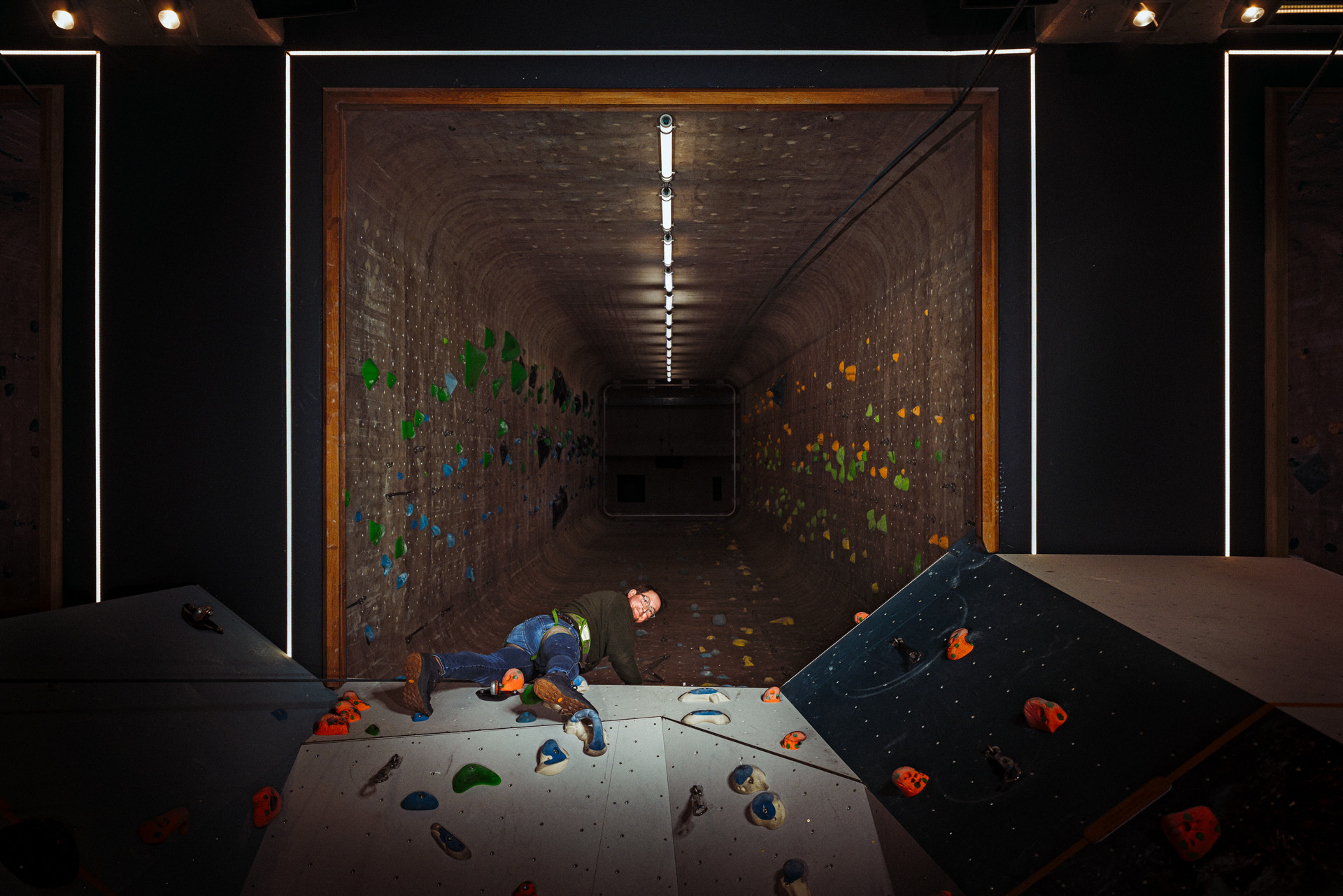
Das Werksviertel-Mitte ist alles andere als vorher- und austauschbar. Hier strömen jeden Wochentag in der Früh junge Kreative, Gründer, Künstlerinnen und viele andere Menschen in die ehemaligen Industriegebäude, in denen sich heute unterschiedlich große Büros oder Ateliers befinden. Viele versorgen sich vorher in einem der Cafés im Viertel mit Frühstück. Etwas später machen sich die Touristen auf den Weg, um vom Werksviertel aus München zu entdecken. Backpacker, die günstig im Wombats Hostel wohnen. Junge Paare, die den unkomplizierten Stil des Gambino Hotels schätzen, oder Familien, die im Adina Hotel, dem höchsten Hotel der Stadt, die Annehmlichkeit eines Apartments genießen. Seinen ersten richtigen Höhepunkt erlebt das Werksviertel um die Mittagszeit, wenn alle Welt in die mehr als 20 unterschiedlich ausgerichteten Restaurantbetriebe strömt. Später begegnet man manchen vielleicht im Theater oder bei einem Konzert, bei einer Fahrt im Riesenrad, beim Bouldern in der Kletterhalle oder beim Tanzen in einem der vielen Clubs.
Durchs Viertel bewegt man sich am besten zu Fuß.
Copyright: Ivana Bilz
Copyright: Ivana Bilz, 2021
Wer sich an einem Wochentag auf den Knödelplatz setzt, kann erleben, welch unterschiedliche Menschen hier zusammenkommen. Die Senioren in Altersarmut, die vom Verein „Ein Herz für Rentner“ unterstützt werden. Die Rollstuhlfechter, die hier ihren olympischen Stützpunkt betreiben. Künstler und Handwerker. Business und Party People. Gründer ebenso wie die Mitarbeiter von DAX-Konzernen, die im Viertel ihre Think Tanks haben.
Sie alle spüren, dass dieser Ort einen besonderen Grundriss besitzt, weil zahlreiche der alten Industriegebäude nicht abgerissen, sondern kernsaniert und neuen Nutzungen zugeführt wurden. Sie staunen über die Schafe, die auf einer auf einem Dach eingerichteten Hochstadtalm friedlich grasen. Sie bewundern die Kunst – Skulpturen und Street Art –, die sich überall im öffentlichen Raum befindet. Sie loben das Bier, das aus der vierteleigenen Brauerei stammt. Sie entdecken das Viertel zu Fuß, selbst wenn sie mit dem Auto gekommen sind, da die Wege aus den Tiefgaragen niemals direkt in den Gebäuden, sondern immer im öffentlichen Raum enden.
Die Würdigung des Werksviertels durch Marie-Theres Okresek, der Juryvorsitzenden des Deutschen Städtebaupreises, hätte daher nicht schöner formuliert sein können.
Bildinfo: Copyright: Ivana Bilz, 2024
Der Ort ist ständig in Bewegung, entwickelt sich weiter. Der öffentliche Raum verbindet und trägt diese unterschiedlichen Strukturen in seinem ebenso experimentellen Charakter. Viele liebevolle Details machen das Werksviertel zu einem der außergewöhnlichsten Projekte der jüngeren Vergangenheit.
Im Werksviertel ist der Plan einer modernen und lebendigen Stadtentwicklung aufgegangen. Weil die Planer und Betreiber des Areals ihr Ziel nie aus den Augen verloren haben und konsequent geblieben sind. Derweil wird am nächsten Meilenstein gearbeitet. Rund 600 Wohnungen für 2000 Menschen werden in den kommenden Jahren allein im Werksviertel-Mitte entstehen. Auch hier wird ganzheitlich gedacht. Innovative Baustoffe und Verfahren sollen eingesetzt werden, ebenso wie neue Wohnformen sowie neue Arten des Zusammenlebens.
Als weiteres Leuchtturm-Projekt ist im Werksviertel der Bau eines Konzerthauses für Bayern geplant, in dem das Symphonieorchester des Bayerischen Rundfunks seine Heimat finden soll. Der künftige Chefdirigent des BRSO, Simon Rattle, hat diesen Anspruch und Wunsch kürzlich noch einmal nachdrücklich unterstrichen. Für die Gestalter des Werksviertels ist die Auszeichnung mit dem Deutschen Städtebaupreis 2023 in jedem Fall Bestätigung und Ansporn zugleich, immer wieder spannende Antworten auf die Frage zu finden: Wie wollen wir in Zukunft leben?
Noch ein Klick zur Lebensfreude. Wir nutzen Cookies, damit unsere Webseite sicher und zuverlässig läuft. Einverstanden? Dann klicke bitte „Annehmen“. Weitere Infos und Optionen findest Du in den „Einstellungen“ und in unserer Datenschutzerklärung.
Hier findest du eine Übersicht über alle verwendeten Cookies. Du kannst die Zustimmung zu ganzen Kategorien geben oder sich weitere Informationen anzeigen lassen und so nur bestimmte Cookies auswählen.
Unbedingt erforderliche Cookies:
AnbieterWerksviertel-MitteZweckDiese Cookies werden benötigt, um essenzielle Daten zu speichern. Es werden deine bevorzugten Einstellungen gespeichert und festgehalten, ob du den Cookie-Banner bereits gesehen hast.Cookie Namen & Laufzeitlanguage (365 Tage) / cookie-modal (365 Tage) / consent-* (365 Tage) / version (365 Tage) / liked_posts (365 Tage) / access-key-* (30 Tage)
Analyse-Cookies:
AnbieterMatomoZweckDiese Cookies werden verwendet, um wiederkehrende Besucher zu identifizieren und um Daten zum aktuellen Besuch zu erfassen.Cookie Namen & Laufzeit_pk_id (13 Monate) / _pk_ses (30 Minuten)
Marketing-Cookies:
AnbieterYoutubeZweckDiese Cookies werden verwendet, um deine aktuelle Bandbreite zu speichern und festzustellen, ob du die neue oder die alte Player-Oberfläche erhaltest. Außerdem wird eine eindeutige ID erfasst, um Statistiken darüber zu führen, welche YouTube-Videos du bereits gesehen hast.Cookie Namen & LaufzeitVISITOR_INFO1_LIVE (8 Monate) / YSC (Sitzung)